East Point hosts meeting on proposed energy storage center
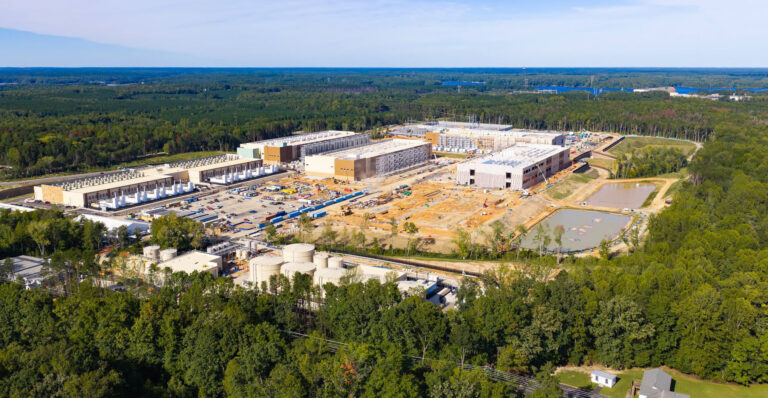
Another large infrastructure project may soon be in the pipeline for Louisa County, as the Charlottesville-based East Point Energy is proposing construction of a new energy storage facility near Harris Creek Road off Courthouse Road.
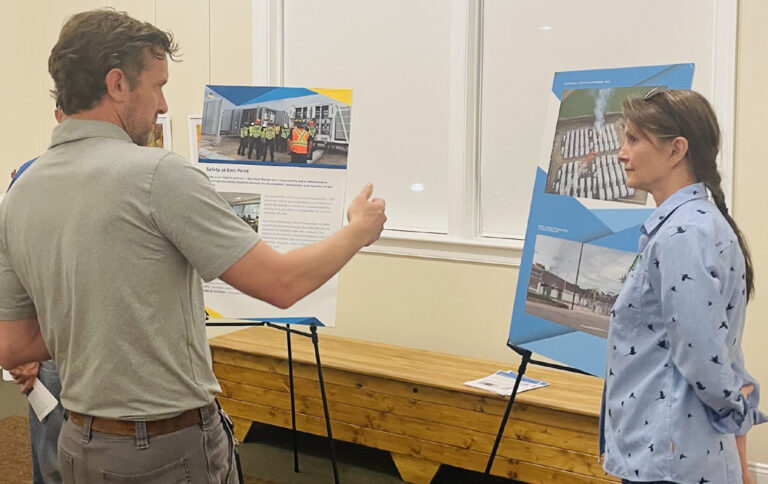
On March 26, representatives of the company hosted an informational meeting for the public at Louisa Arts Center, providing residents an opportunity for open dialogue and to learn more about the project’s potential benefits. Although the project is not associated with data centers, news of the facility has emerged alongside the proposed Valley Link transmission line project and two Amazon Web Services (AWS) data centers currently under construction, leading many residents to report a sense of project fatigue.
Also known as BESS, battery energy storage systems function as large rechargeable battery banks equipped with supporting electronics, cooling systems and safety controls that dispatch electricity when demand is highest. Utility-scale energy storage systems are typically housed in specially engineered shipping containers, outdoor cabinets or purposebuilt buildings. Project sizes vary, with some covering areas roughly equivalent to a hockey rink or soccer field.
According to Business Wire, East Point Energy’s Dry Bridge Energy Storage Project in Chesterfield became Virginia’s largest operational BESS after be- ing sold to Dominion Energy. The company reported in a regulatory filing to the Virginia State Corporation Commission that the project was expected to cost about $41.2 million, including expenditures through May 31, 2022, and projected expenses to complete construction and begin commercial operation. The project provides a 20-megawatt maximum output and can serve approximately 5,000 homes at peak discharge. For comparison, the proposed Ava Energy Center project in Louisa would be up to 200 megawatts — roughly 10 times the output of Dry Bridge — though final storage duration, measured in megawatt-hours, has not yet been publicly finalized.
Many other large projects have also since been approved or are under development, and East Point Energy would need a conditional use permit (CUP) for the 50-acre agriculturally zoned parcel off Harris Creek.
Hundreds of utility-scale energy storage projects are currently operating or under construction across the United States, including in both urban and rural locations with extreme climates. Energy storage systems help improve grid efficiency and provide a variety of benefits for consumers, businesses and communities. According to the American Clean Power Association, such systems can reduce outages, lower utility costs and support local economies by broadening tax bases and creating jobs. The project is also estimated to generate $25 million in local tax revenue over its operational life, potentially creating a new revenue stream for community priorities.
Despite those benefits, some Louisa residents continue to ask why the project must be built in their backyards.
East Point Energy Vice President of Project Development Maggie Howe addressed that concern.
“Regarding site selection, we develop projects in areas where we can have the biggest impact on grid reliability, utilize existing infrastructure, i.e., substations, transmission lines, etc., and where suitable land is available,” Howe stated. “As with many communities, past negative experiences with unrelated projects colored some of the feedback we received. We are not a data center, transmission line or solar project.”
Howe added that the community meeting was productive and said the Charlottesville- based company begins community engagement as early as possible in the development process, viewing itself as a neighbor with hopes of building a long-term partnership.
Nonetheless, for some residents, the information did little to ease concerns. Local resident Sue Rowan, who lives near the proposed Ava Energy site, said she left the meeting “completely unsatisfied.”
“I don’t mean to be hostile, but we love our land and our agriculture here [in Louisa County], and we will do whatever we can to protect our way of life,” Rowan stated. “With so many things coming at us all at once, it’s extremely frustrating… when is it going to stop, and how much green will be taken away? How many health risks do we need to be concerned about? I am leaving with so many questions that could not be answered.”
Rowan added that additional studies should be conducted before moving forward with a project of this magnitude and said the benefits do not outweigh the negatives.
“Of course everybody says ‘not in my neighborhood,’ but we have seen this song and dance before when they tell us these projects will save us money, but I haven’t seen any difference in my electric bill — if anything, it has gotten higher,” Rowan stated. “None of us knew about this until the last minute, and it feels very sneaky. It seems like they believe we are just the little people and that we are being taken advantage of… call it project fatigue or whatever you want to call it, but our representatives need to listen to we the people and say no.”
Other residents raised safety concerns, asking about battery temperature management, overheating prevention and environmental factors, including the facility’s location within the Central Virginia Seismic Zone and less than three miles from the Quail Fault Zone.
According to East Point officials, in addition to collaboration with fire and EMS personnel, BESS facilities are subject to stringent regulations and standards that are regularly updated to reflect current safety and design practices. NFPA 855 establishes mandatory requirements for design, installation, commissioning, operation, maintenance and decommissioning of BESS facilities. UL 1973 evaluates performance under simulated adverse conditions, while UL 9540 and UL 9540A assess thermal runaway scenarios and overall safety.
East Point Energy is an Equinor company with 55 employees and projects under development in 13 states. In Virginia, East Point has projects under construction in Prince William County and Loudoun County, with completed developments in Spotsylvania County, Chesterfield County and Sussex County.
Adding to the suspense and local uncertainty, the proposed Ava Energy Center could be on a collision course with another major infrastructure project. The Valley Link Joshua Falls– Yeat project is a 115-mile, 765kV transmission line running from Campbell County to Culpeper County and includes a route that runs almost directly through East Point’s proposed site near Harris Creek.
The Route B orange variation, often referred to as Route Corridor 1, is one of two primary right-of-way paths under evaluation for the Valley Link project. The route enters Louisa County from the south, crosses Route 208 north of the South Anna River and passes directly through Harris Creek Road before later converging with the main orange corridor near the Belcher Solar Facility.
If selected, the route would require a 200- foot- wide cleared right-of-way and installation of steel lattice towers ranging from 135 to 160 feet tall. It is one of several preliminary routes under study, and a final preferred route is not expected to be submitted to the Virginia State Corporation Commission until approximately September 2026.
A permit application for the Ava Energy Center is expected this month, and if approved, it remains unclear whether the project would influence Valley Link planning. East Point officials reiterated that the projects are entirely unrelated, though the transmission line timeline could affect their plans.
“If that route is selected, we would not be able to move forward with the project as designed today,” Howe stated, adding that contingency plans are not being discussed publicly at this time. “It would be expensive for Valley Link to buy out our project site, but it’s hard to say how much influence one property can have on a project that size.”
Ferncliff resident Melissa Byers, who lives on a farm a few miles from the affected area, also shared concerns about the possible conflict.
“It’s pick your poison, because one of these big companies is going to have their way one way or the other,” Byers stated. “It’s hard to follow all of this stuff and know who to trust — they say the projects are unrelated, but they also told us tonight that the battery [storage system] will eventually need transmission lines. Are we being duped? I don’t know, but the whole thing just feels off.”
Following the meeting, Howe expressed appreciation for the community input received during the event.
“I will say, the people of Louisa are so polite and respectful,” Howe stated. “The questions were thoughtful and the passion for the community was palpable… we think this level of continuous engagement is very important.”