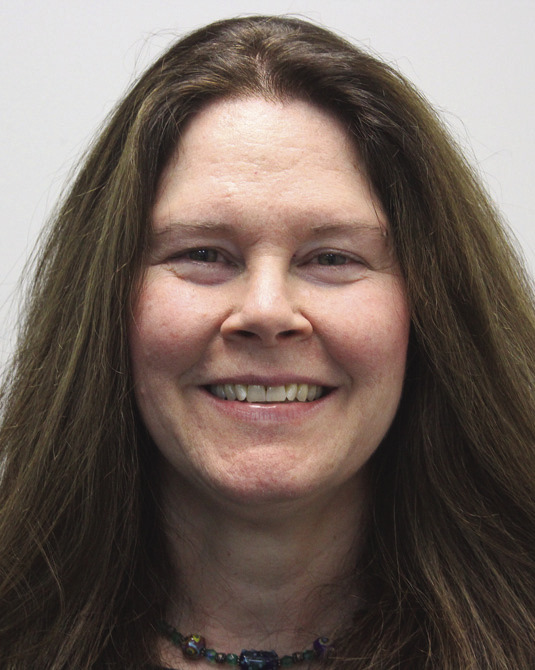
Flora Molton

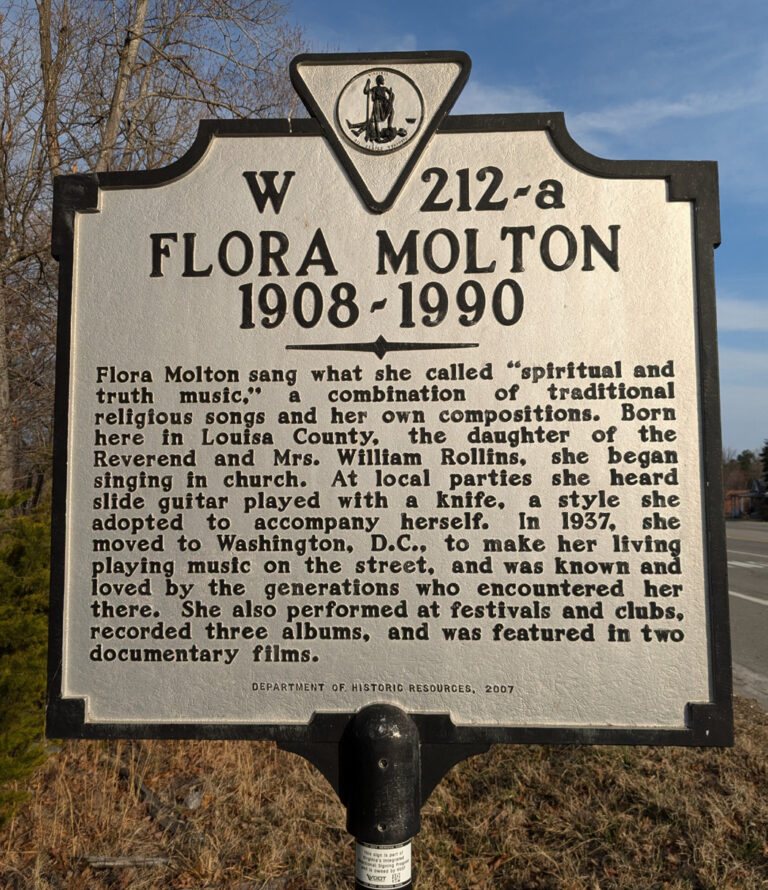
Flora Molton was a street singer in Washington, D.C. She accompanied herself on guitar and sang religious songs and songs of her own composition; “spiritual and truth music,” she said. Her roadside marker on Three Notch Road (U.S.-250) near Zion Crossroads tells of encounters with generations of people on the streets of Washington and speaks kindly of the love she sensed coming from all of them. Flora Molton (1908-1990) was born here in Louisa County, daughter of the Reverend Mr. and Mrs. William Rollins. She embraced the joys of singing at church gatherings early in life. For many, the songs of youth linger unknowingly embedded only to flourish later in a thriving adult. So it was with Flora Molton. Her spiritual and truth music and her compositions are lasting here at home, on the streets of Washington and beyond.

As an adult, Flora sang and played the organ at church. She performed at festivals and recorded three albums. She was featured in two documentary films, and she toured Europe with her songs and music. Flora Molton performed for all, all her life, but was partially blind from birth. Roadside markers in Washington, D.C. and Louisa County celebrate her story. It can be said that Flora Molton had a musical ministry downtown in Washington in front of a well-known department store. It can be asked if her ministerial reach (she was an ordained minister) went beyond a love of music. If so, can it be assumed that Louisa County, Washington and the world are better off for her having reached out to those who would listen to her music, hear her words, and follow her example? Yes, it can.

Flora began playing on the streets of a racially segregated capital city with an intolerant police department in the 1950’s; intolerant of her presence as were stores and restaurants. Despite being chased off the streets at first, she persisted in her dream as she watched the city change around her while playing in front of Hecht’s department store and later, Woodward & Lothrop. She was there when public transportation changed from electric streetcars to underground Metro. She played on the street summer and winter, undeterred by external events, riots and the assassination of Dr. Martin Luther King, Jr. It was her ministry, her gift to passerby and local regulars who knew her well.

The Festival of American Folklife (1976) was organized by the Smithsonian and brought attention to old-time blues and gospel singers like Flora Molton. She had been brought to Washington by her brother, a minister at Florida Avenue Baptist Church in D.C. and Baltimore churches. Her musical gifts, however, propelled her into a life of performances and recognition by the folk music community leading to appearances at the Smithsonian Folk Festival within sight of the Capitol, at the Library of Congress, and in Europe. Throughout all, she continued making “appearances” on the streets of Washington until six months before her death in 1990. It is said that her favorite titles were, “I want to be ready when God calls,” and, “When the war is over.”