Tenants poised to move into FLHF affordable housing units

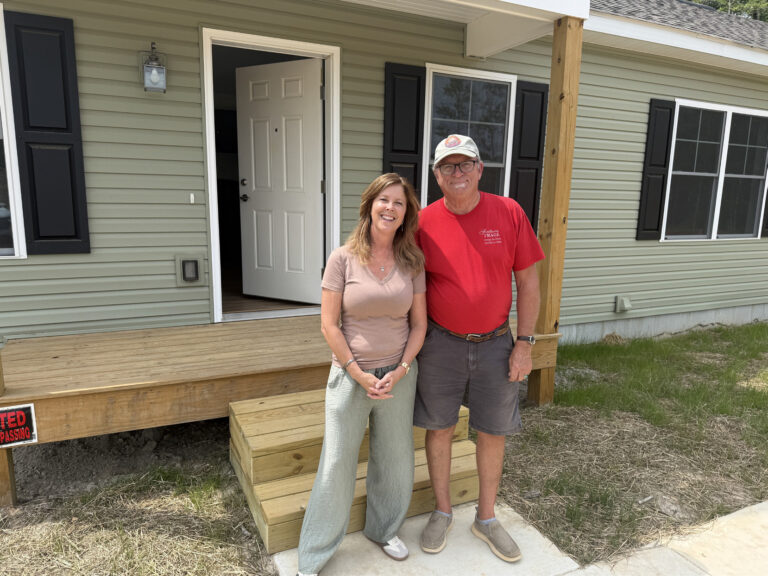
Louisa County has just taken a “big step forward” in supplying affordable housing to the community, according to Kim Hyland, the Executive Director of the Fluvanna-Louisa Housing Foundation (FLHF). On June 9 and June 11, FLHF held tours for local leaders involved in the project to check out the finished construction of four one-bedroom units before they are occupied later this month.
In August 2023, the Louisa County Board of Supervisors (BoS) unanimously approved an affordable housing application from FLHF to rezone the eight-acre site adjacent to the Louisa County Resource Council (LCRC) from industrial to residential to allow for the use of multifamily dwellings, a total of 25 housing units.
The 25 housing units include 16 one-floor, handicap-accessible senior living units available for individuals making under 60% of the county’s average median income, equating to roughly $36,000. The units are intended for residents aged 62 years or older or handicapped individuals.
A more permanent housing design for living has been identified as a high need in the area, Hyland said. The units feature a one-floor living space, an accessible shower, kitchen access with easy to reach shelving, three-foot doorways and an oversized hallway. Handicap ramps will be provided as needed for the three steps into the home. For one of the four senior units that are about to be occupied, Hyland said FLHF raised funds of $110,000 through crowdfunding with the Louisa community.
The other nine units are two-bedroom dwellings intended for essential workers who are already living or working in Louisa but can’t afford to live in the county. The two-bedroom rentals are for families with a combined income that amounts to less than 80% of the average median income in Louisa, or $55,000. Essential workers include those employed in education, law enforcement, Fire and EMS, the service industry and employees of the county. Hyland stated that the first three two-bedroom units will arrive in July with Certificate of Occupancy’s planned for October.
The two-bedroom units are designed for small, starter families, Hyland said. Families in the two-bedroom units will be automatically enrolled in FLHF’s first time home buyer class, as Hyland reiterated the goal is to avoid long-term rentals and to keep the units turned over as they move residents into homeownership.
Louisa County contributed $775,000 to the project, a sum acquired by the county in 2022 through the Community Project Funding initiative, after Rep. Abigail Spanberger (7th District) secured the money in response to a county request.
Additionally, Hyland stated that the housing foundation has spent about $1,000,000 of its own funds, with government funding to help with the infrastructure. Infrastructure amounted to over $2,000,000, and one of main challenges, Hyland said, was over $300,000 to get a bore required for water and sewer access underneath the railroad track. Hyland said FLHF is still waiting to hear about funding for the remaining units.
Currently, there are over 150 people on the waitlist with applications to reside in the affordable housing units. Hyland encouraged interested community members to fill out a preliminary application for FLHF to have cursory information about new applicants; then, FLHF will reach out to people for a secondary application.
“It’s an extraordinary relief [to be able to provide housing later this month] — it’s not as many buildings as we would have liked to have completed upfront — but we are relieved to actually provide some solutions to people who are in dire need,” Hyland said.
Jeff Martin is the board chair of FLHF and general contractor with Southern Image Design Builders, the contractors for the project.
“This has been a need for a long time in this county and I’m grateful to play a part in helping to fulfill that need,” Martin said. “Hopefully, this is the beginning of a much bigger project of supplying the need.”
While Hyland noted that this is a “big step forward,” she also stated that the project is rightsized for Louisa County, and that while it may not satisfy all of the need, it’s going to give FLHF an idea of how much more of a need exists in the community.
“We really designed this to meet Louisa’s needs very specifically with rural housing,” Hyland said. “That has been a big push in the state of Virginia.”